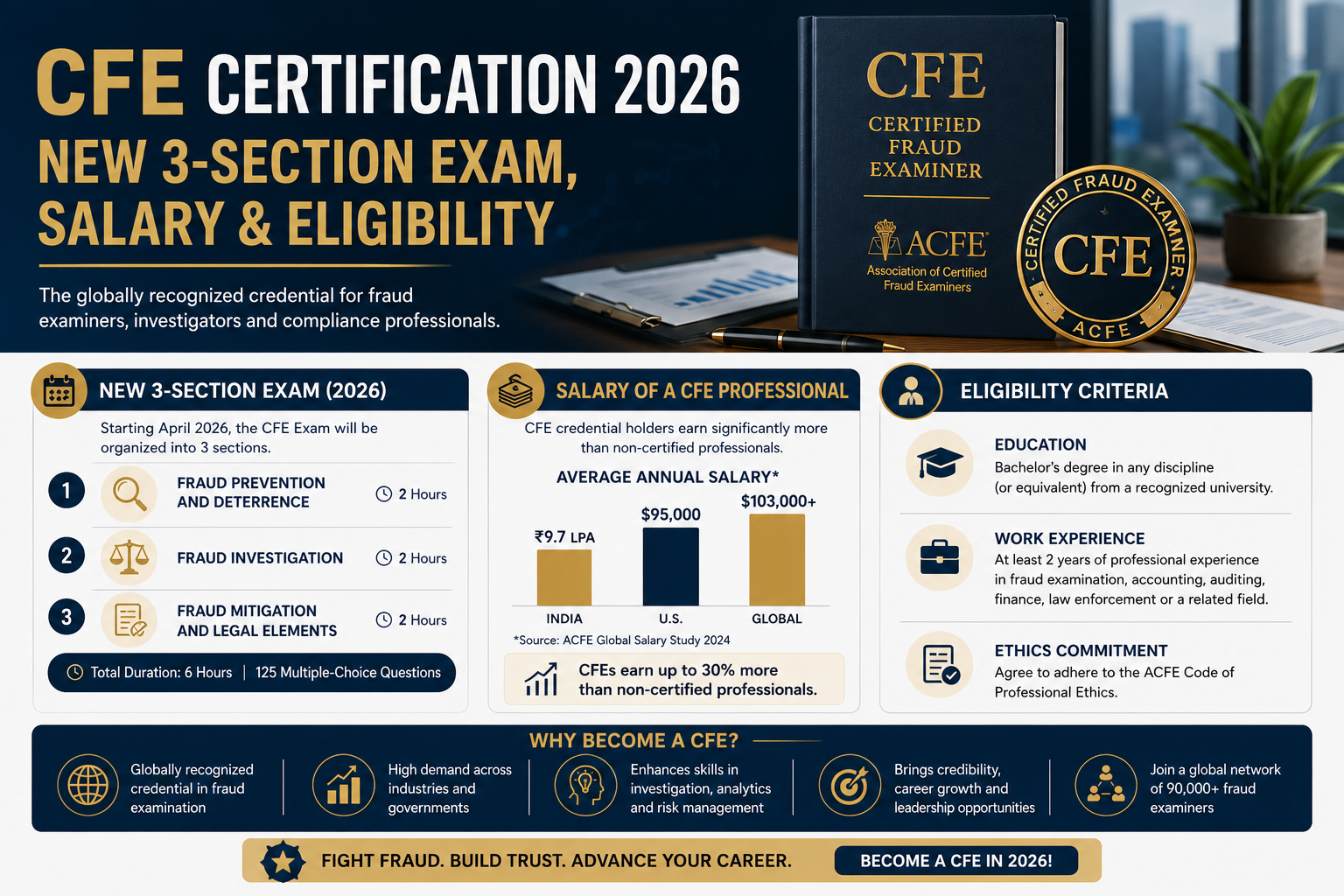
In a country where fraud cases are spiraling, and businesses are desperate for skilled professionals, why settle for mediocrity? If you're eyeing a career in fraud prevention, the Certified Fraud Examiner (CFE) certification from inSAKE Academy may just be your golden ticket. This is India’s first Pay-After-Pass CFE program — pay only when you’ve secured that coveted certification.
What Sets CFE Apart?
Getting certified in the field of analytics can often feel like navigating a labyrinth. Simultaneously applying to various courses, incurring hefty upfront fees, and hoping for the best just seems like a gamble. The CFE program dismantles that archaic model. Here, you invest nothing until you’ve proven yourself — a dynamic shift that speaks volumes.
- Zero Upfront Fees: Students can concentrate solely on mastering the content without the financial burden.
- Daily Mentorship: One-on-one mentoring assures that you won't just skim the surface of important topics; you’ll dive deep.
- Global Recognition: The CFE credential, awarded by the global Association of Certified Fraud Examiners (ACFE), is a testament to the credibility you’ll carry.
CFE Certification vs. Other Programs
It's easy to confuse the CFE certification with others like the Certified Internal Auditor (CIA) or Chartered Accountant (CA) programs. But let’s break it down clearly.
CFE vs. CIA
- Focus: While the CIA is more focused on internal auditing, the CFE zeroes in on fraud detection and prevention.
- Roles: CFEs often find themselves in roles like compliance officers or fraud examiners, whereas CIAs might focus on broader auditing roles.
- Job Market: With an alarming rise in fraud cases due to economic fluctuations, companies are specifically seeking CFEs, making this choice strategically lucrative.
CFE vs. CA
- Scope: A Chartered Accountant deals with overall financial health, whereas a CFE hones in on fraud risks — a necessary specialization in our current landscape.
- Entry Barrier: Becoming a CA often demands extensive academic prerequisites and a rigorous training process, while the CFE has more accessible entry points, especially with the pay-after-pass model.
- Earning Potential: According to recent market analysis, CFEs tend to command higher salaries in fraud prevention roles compared to CIAs due to the specialized skill set in a growing demand.

Who Should Enroll?
If you’re an analytical thinker eager to contribute to a fraud-free business environment or a finance professional looking to upskill, the CFE certification could be your next big career leap. For graduated students, early-career professionals, or even seasoned auditors, this certification offers a clear pathway to upskilling without upfront risks.
Time Commitment and Difficulty
Committing 35 study hours to complete the CFE isn't daunting. Designed to be engaging yet informative, this intermediate-level certification positions you to grasp advanced fraud detection techniques. The focus on practically applying your learnings ensures you're job-ready before the exam.