At 9:15 AM in a glass tower overlooking Mumbai’s Bandra Kurla Complex, a senior fraud investigator opens an encrypted email alert. An anonymous whistleblower inside a mid-sized NBFC claims that a regional manager has been approving phantom loans to shell entities using fabricated GST returns. By 9:30 AM, the investigator isn't staring blankly at spreadsheets; they are executing a battle-tested forensic workflow that protects hundreds of crores in institutional capital.
If you have been researching the Certified Fraud Examiner (CFE) credential awarded by the ACFE, you likely know it is the gold standard in forensic accounting and fraud investigation. But what does the daily reality of a CFE actually look like on the ground in India? Here is a minute-by-minute breakdown of what certified professionals do, the tools they command, and how this credential unlocks mid-to-senior roles across Big 4 firms, private banks, and tech conglomerates.
09:00 AM to 11:30 AM: Whistleblower Triage and Emergency Evidence Collection
The morning begins with risk assessment and evidence preservation. Under Indian corporate governance standards, including Section 143(12) of the Companies Act 2013 and SEBI LODR regulations, companies must act swiftly on credible allegations of material fraud.
When a hotline tip or automated audit flag lands on a CFE’s desk, the first priority is establishing chain of custody. Fraud examiners do not jump to wild conclusions. They secure mirror images of corporate laptops, back up cloud email servers, and lock down ERP access permissions for suspect accounts before perpetrators realize they are under scrutiny.
During these early hours, a CFE works closely with internal IT security and legal counsel. They assess the scope of potential exposure, build an initial hypothesis, and document every step to ensure that all evidence gathered will stand up in court or before regulatory bodies like the Serious Fraud Investigation Office (SFIO).
11:30 AM to 02:00 PM: Digital Forensics, Data Analytics, and Transaction Unraveling
Late morning is dedicated to deep analytical work. Modern financial crime in India rarely leaves a paper trail of handwritten ledgers; it leaves digital footprints across SAP systems, UPI logs, custom banking portals, and vendor management databases.

CFEs use specialized data analytics techniques to identify anomalies across thousands of rows of transactional data. They apply Benford’s Law to spot unnatural numeric patterns in invoice figures, run fuzzy matching algorithms to uncover matching bank accounts between employees and third-party vendors, and map relationships between seemingly unrelated shell companies.
For instance, if a procurement officer in a Gurgaon tech enterprise is running a kickback scheme, a CFE will cross-reference vendor creation dates, IP addresses during invoice submission, GSTIN registration details, and bank account IFSC codes. Within two hours of analytical modeling, suspect patterns emerge that an standard financial auditor would miss entirely.
02:30 PM to 04:30 PM: The Art of the Admission-Seeking Interview
After analyzing hard data, the afternoon brings direct human interaction. Interrogating suspects or interviewing witnesses is where a Certified Fraud Examiner’s formal training in interview psychology and lie detection becomes crucial.
Unlike traditional police interrogations, forensic interviews conducted by CFEs in corporate India follow structured, non-accusatory methodologies. The objective is to gather facts, test the suspect's explanations against digital evidence, and systematically dismantle fabricated excuses until the truth emerges.
In a typical scenario, a CFE sits down with a suspect vendor or employee in a quiet conference room. Armed with transaction logs and signed purchase orders, the examiner asks open-ended baseline questions before introducing calibrated, evidence-backed inquiries. Knowing how to read non-verbal behavioral cues and frame questions that encourage voluntary disclosure often leads to signed admission statements before the session ends.
04:30 PM to 06:30 PM: Reporting to the Audit Committee and Regulatory Compliance
The late afternoon is reserved for translation—converting complex technical findings into clear, objective, and actionable executive reports. Board members and C-suite executives do not have time to comb through thousands of data logs; they need clear facts, quantified financial impact, and immediate remedial recommendations.

A CFE drafts comprehensive investigation reports detailing the methodology, factual findings, loss quantification in INR, control breakdowns, and proposed anti-fraud controls. These documents directly inform executive decisions regarding employee termination, asset recovery lawsuits, insurance claims, and statutory filings to regulators like the RBI, SEBI, or MCA.
Beyond reactive investigations, CFEs also conduct proactive Fraud Risk Assessments (FRAs). They evaluate vulnerable operational processes—such as high-value procurement, scrap sales, or loan disbursement—to plug control gaps before bad actors exploit them.
The Career Horizon: Salaries and Roles for CFEs in India
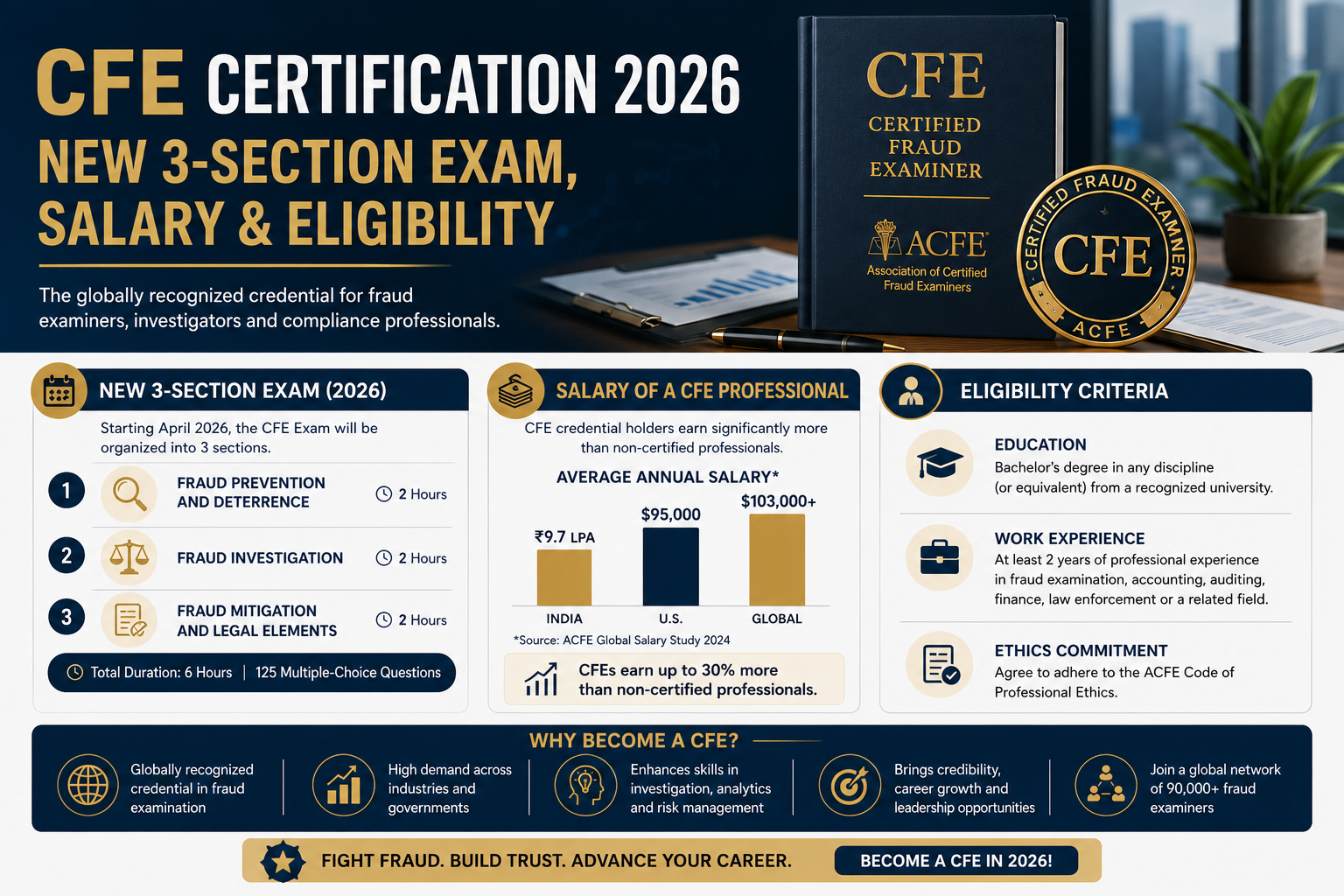
The specialized skill set of a CFE commands high compensation across Indian industry sectors. Fraud loss prevention directly impacts a company's bottom line, making qualified investigators indispensable assets to corporate leadership.
- Entry-Level Forensic Associate (0–3 years experience): ₹8 LPA to ₹12 LPA in Big 4 firms (EY, PwC, Deloitte, KPMG) and specialized risk advisories.
- Mid-Level Forensic Manager (4–8 years experience): ₹15 LPA to ₹24 LPA leading investigation teams in private sector banks (HDFC, ICICI, Axis), fintech unicorns, and multinational corporations.
- Senior Director / Head of Internal Audit & Fraud Control (10+ years experience): ₹30 LPA to ₹60+ LPA overseeing enterprise risk, forensic technology, and regulatory compliance.
demand for certified professionals continues to outpace supply as Indian regulatory enforcement tightens and corporate governance expectations reach global standards.
How inSAKE Academy Prepares You for the CFE Exam in 35 Hours
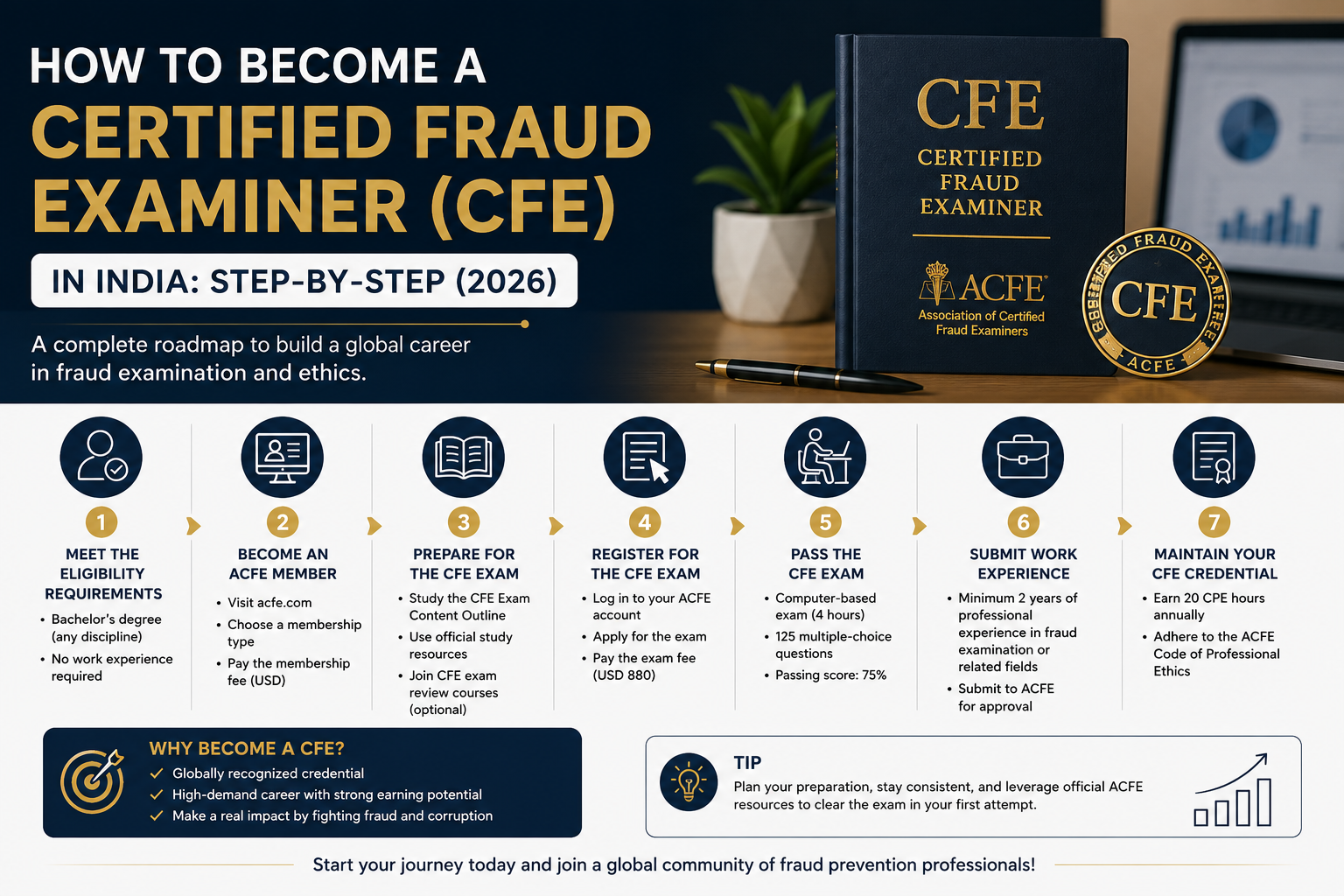
Cracking the four modules of the CFE exam—Financial Transactions & Fraud Schemes, Law, Investigation, and Fraud Prevention & Deterrence—requires structured, targeted preparation rather than endless rote memorization.
inSAKE Academy offers India’s First Pay-After-Pass CFE Program, designed specifically for busy working professionals who want to pivot into fraud analytics and forensic risk management without upfront financial risk.
- Zero Upfront Fee: You pay the tuition fee only after you successfully clear your CFE exam and earn your official credential.
- Daily 1-on-1 Mentorship: Work directly with seasoned forensic experts who break down complex case studies, legal frameworks, and ACFE exam patterns.
- 35 High-Impact Study Hours: A streamlined, outcome-oriented curriculum designed to get you exam-ready efficiently without interrupting your current job.
- Intermediate Level Accessibility: Ideal for auditors, accountants, legal professionals, compliance officers, and IT security specialists looking to specialize.