Most project managers in India do not fail the PMP exam because they lack intelligence or work experience. They fail because they approach a scenario-driven, decision-making evaluation like a college memorization test. When you are managing client deliverables in Bengaluru or handling delivery escalations in Pune, reading through a 700-page standard without an execution system is a guaranteed path to burnout.
Preparing for the modern Project Management Professional (PMP)® exam requires a structured timeline that balances predictive governance, agile ceremonies, and hybrid mechanics. With the latest alignment toward the PMBOK® Guide 8th Edition and the updated 2026 exam content parameters, rote memorization is completely dead. You need a week-by-week operational roadmap that moves you from core mindset calibration to full-length simulator endurance.
Here is your exact 8-week preparation blueprint designed to clear the PMP exam on your first attempt—backed by a risk-free framework where your training provider only succeeds when you do.
Phase 1: Mindset Calibration & Exam Architecture (Weeks 1-2)
The first two weeks establish your foundation. The exam does not evaluate how your current employer manages projects; it evaluates how PMI expects a proactive, servant-leader project manager to respond under specific governance constraints.
Week 1: Breaking Down the Examination Content Outline (ECO)
- Map out the three core domains: People (42%), Process (50%), and Business Environment (8%).
- Understand the shift in the PMBOK 8 framework: focusing on value delivery systems, tailoring, and active governance rather than static process charts.
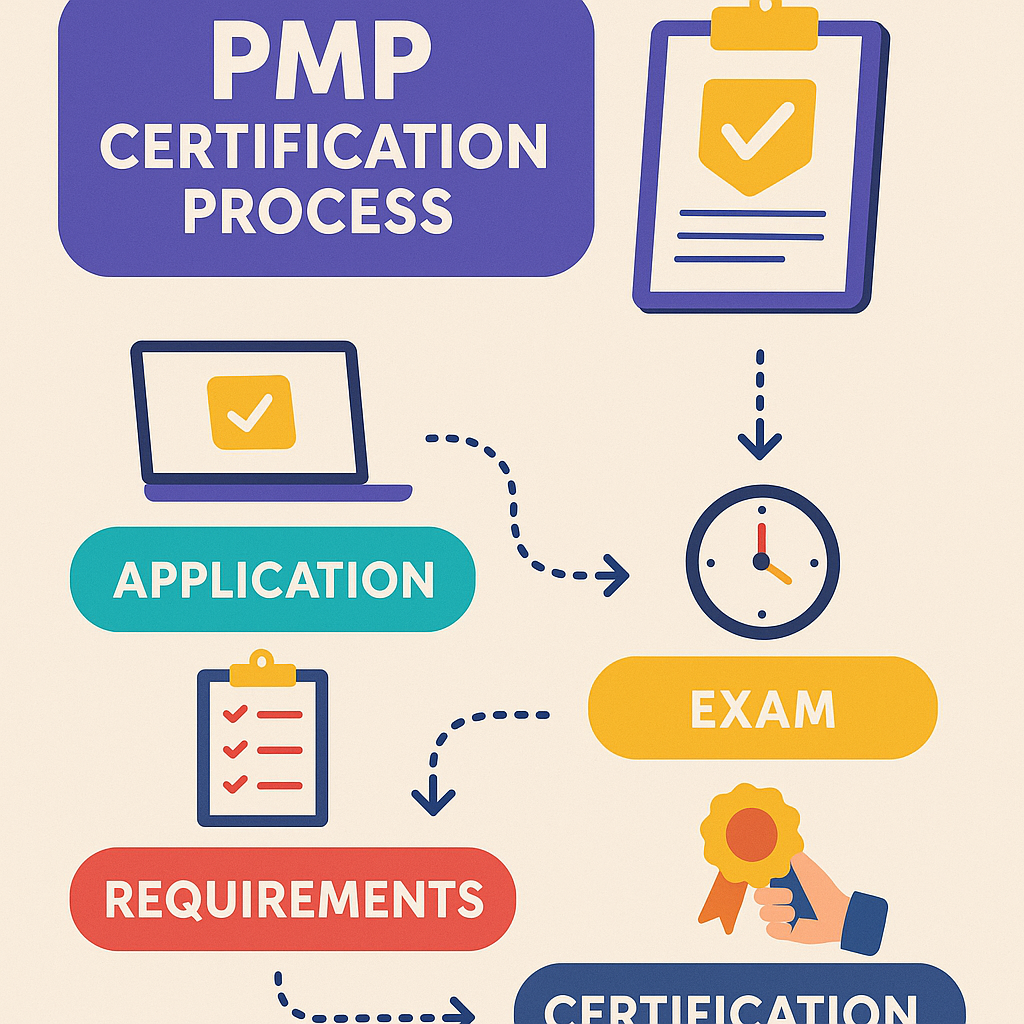
- Audit your professional experience against the PMI eligibility criteria (36 months of project leadership for degree holders or 60 months for diploma holders).
- Formalize your 35 mandatory contact hours through a structured, mentor-led program.
Week 2: Predictive Life Cycles and Project Governance
- Master the integration of scope, schedule, and cost baselines without relying on mechanical flashcards.
- Study Earned Value Management (EVM) formulas (CV, SV, CPI, SPI, EAC, ETC) strictly through situational interpretation rather than manual long-form arithmetic.
- Decode Change Control Board (CCB) workflows: never implement a change without assessing impact, logging the request, and submitting it through formal governance.

Phase 2: Agile, Hybrid, and Servant Leadership Mastery (Weeks 3-5)
Over 50% of the modern PMP exam tests agile and hybrid delivery models. If your daily experience is restricted to traditional waterfall infrastructure or client-driven fixed-bid contracts, this phase requires your deepest cognitive shift.
Week 3: Agile Principles & Framework Mechanics
- Deep-dive into Scrum, Kanban, and Extreme Programming (XP) practices.
- Deconstruct agile roles: why the Scrum Master facilitates rather than assigns tasks, and how the Product Owner owns prioritization.
- Analyze sprint ceremonies, artifact transparency (Product Backlog, Sprint Backlog, Burndown/Burnup charts), and the Definition of Done (DoD).
Week 4: Hybrid Strategy & Conflict Resolution
- Learn how to blend predictive governance (e.g., procurement and compliance milestones) with iterative sprint cycles (e.g., feature engineering).
- Master conflict resolution techniques according to Thomas-Kilmann models (Collaborating/Problem Solving vs. Forcing vs. Compromising).
- Focus on team empowerment: removing impediments, shielding the development team from external stakeholder noise, and coaching cross-functional units.
Week 5: Risk, Procurement, and Stakeholder Engagement
- Differentiate between risks (uncertain future events) and issues (current realized problems) in situational questions.
- Evaluate contract types (FFP, CPFF, T&M) and how risk shifts between buyer and seller in Indian IT export and GCC environments.
- Practice stakeholder engagement mapping (Power/Interest Grid, Salience Model) to keep key influencers aligned.
Phase 3: Simulator Endurance and Gap Analysis (Weeks 6-7)
Knowledge without exam stamina is useless. Sitting for 230 minutes to answer 180 dense, scenario-based questions requires physical and mental pacing.
Week 6: Domain-Wise Sectional Quizzes
- Take 50-question batches dedicated entirely to single domains (People, Process, Business Environment).
- Maintain an error log for every question you mark incorrectly or guess correctly. Categorize errors into 'Knowledge Gap', 'Misread the Question', or 'Incorrect PMI Mindset'.
- Revisit weak knowledge areas directly with instructors during live interactive clearance sessions.
Week 7: Full-Length 180-Question Timed Mocks
- Complete at least three full-length mock exams under strict test conditions, including the two scheduled 10-minute breaks.
- Benchmark your scores: target consistent scores of 75% or higher on reputable, high-difficulty simulator mocks.
- Master question breakdown techniques: identify the real problem statement, eliminate the two obviously wrong distractors, and choose the proactive servant-leader solution.

Phase 4: Final Sprint and Exam-Day Strategy (Week 8)
The final week is not for learning new concepts. It is for consolidating the PMI mindset and stabilizing your test-day logistics.
- Day 1 to Day 3: Review your cumulative error log and high-yield summary notes covering the 12 Principles and 8 Performance Domains.
- Day 4 to Day 5: Practice 20-30 rapid situational questions per day to keep your decision instincts sharp without causing mental fatigue.
- Day 6: Complete logistics checks. If taking the exam at a Pearson VUE center (recommended across Indian metros to avoid home network glitches), confirm your travel route and valid government identification (Passport is mandatory for PMI exams in India).
- Day 7: Total rest. Do not take full mock exams 24 hours before your slot.
- Exam Day: Pace yourself at 75 minutes per 60-question block. Use both 10-minute breaks to recharge.
Why inSAKE Academy's Pay-After-Pass Model Changes the Game
Traditional PMP training institutes in India charge you anywhere from ₹15,000 to ₹35,000 upfront. Once your money is collected, their financial incentive ends—whether you pass, fail, or abandon your application.
inSAKE Academy flips this dynamic entirely. Through India's first genuine Pay-After-Pass PMP program, you pay zero upfront tuition fees. We provide the complete 35-hour live curriculum aligned to PMBOK 8, comprehensive application support, and scenario simulators. You only pay our training fee after you clear your exam and hold your certified credential.
This structure ensures our mentors are just as invested in your day-to-day progress as you are. With average project manager compensation in India increasing from ₹14 LPA to over ₹22 LPA post-certification across GCCs and top tech firms, this model offers a completely de-risked path to accelerated career growth.