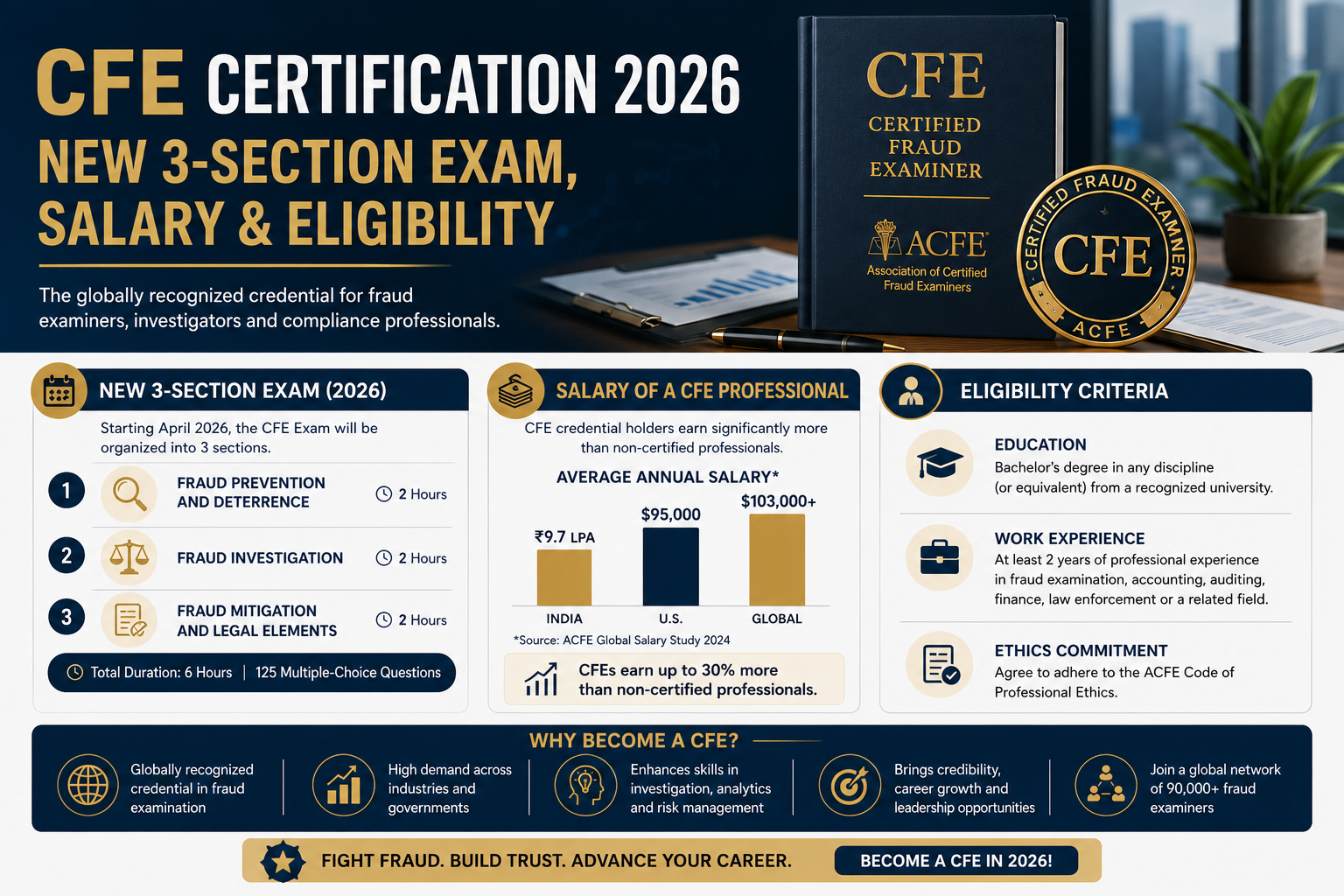
At 9:15 AM in a bustling financial hub like Mumbai’s BKC or Bengaluru’s Outer Ring Road, a Certified Fraud Examiner doesn't start their day with routine spreadsheet maintenance. Instead, they log into a high-security forensic dashboard to flag anomalous vendor payments, untangle shell company networks, or review Whistleblower Policy escalations.
With corporate fraud cases surging across Indian banking, fintech, and retail sectors, certified forensic experts have become essential corporate defenders. Here is what a real day looks like behind the scenes for a CFE in India.
09:00 AM – Sifting Data and Spotting Red Flags
The morning begins with proactive threat detection. Utilizing advanced forensic analytics tools, a CFE analyzes transaction logs across enterprise resource planning (ERP) systems. You aren't just looking at balance sheets; you are scrutinizing systemic patterns across operational data.
Key morning priorities usually include:
- Scrutinizing duplicate GSTIN registrations and off-hour wire transfers
- Identifying invoice-splitting tactics meant to bypass internal approval thresholds
- Uncovering undisclosed related-party transactions across complex corporate subsidiaries
For instance, an automated anomaly trigger might highlight five payments sent to a new vendor in a single afternoon—a classic attempt to bypass executive sign-off limits. By identifying these signals early, a CFE prevents minor financial leaks from turning into multi-crore balance sheet disasters.
01:00 PM – Digital Forensics and Evidence Preservation
After morning triage, the work shifts from automated scripts to hands-on investigation. A CFE routinely coordinates with legal counsel, IT security, and internal audit teams to secure digital evidence.
In an ongoing procurement fraud case, this hour might involve extracting metadata from encrypted email chains, examining alter-ego corporate structures on the Ministry of Corporate Affairs portal, or reconstructing deleted ledger entries. Precision is non-negotiable here. Every piece of evidence must follow strict chain-of-custody protocols so it holds up in an internal disciplinary tribunal or a court of law under the Indian Evidence Act.
03:30 PM – Conducting Forensic Interviews and Fact-Finding
Data tells you what happened, but interviews reveal why and how. In the late afternoon, a CFE steps into the role of an investigator.
These fact-finding sessions require tact, psychological insight, and complete neutrality. Whether interviewing a whistleblower who noticed inventory discrepancies in a Gurugram warehouse or questioning a vendor manager regarding unauthorized approvals, a CFE uses ACFE-standard non-confrontational interview techniques. The objective isn't to accuse, but to systematically confirm facts, assess intent, and establish responsibility.
06:00 PM – Quantifying Risk and Drafting Executive Briefs
Before logging off, a CFE translates raw findings into business impact. You synthesize technical evidence into crisp, actionable executive summaries for the Audit Committee or Managing Director.
A typical report doesn't stop at calculating the exact financial loss—say, a ₹1.8 Crore leak via unauthorized rebate schemes over eighteen months. It outlines specific control failures in the purchasing workflow and provides concrete remediation steps to fortify the organization against future vulnerabilities.
Fast-Track Your Forensic Career with Zero Upfront Risk
The demand for skilled Certified Fraud Examiners across Big 4 accounting firms, private sector banks, and tech MNCs in India has never been higher, with compensation packages for credentialed professionals regularly scaling from ₹10 LPA to over ₹22 LPA. If you are ready to transition into this dynamic, high-impact field, inSAKE Academy offers India’s first Pay-After-Pass CFE preparation program. With 35 hours of focused prep, daily 1-on-1 mentorship, and zero upfront tuition fees, you pay only after you successfully earn your official ACFE credential.