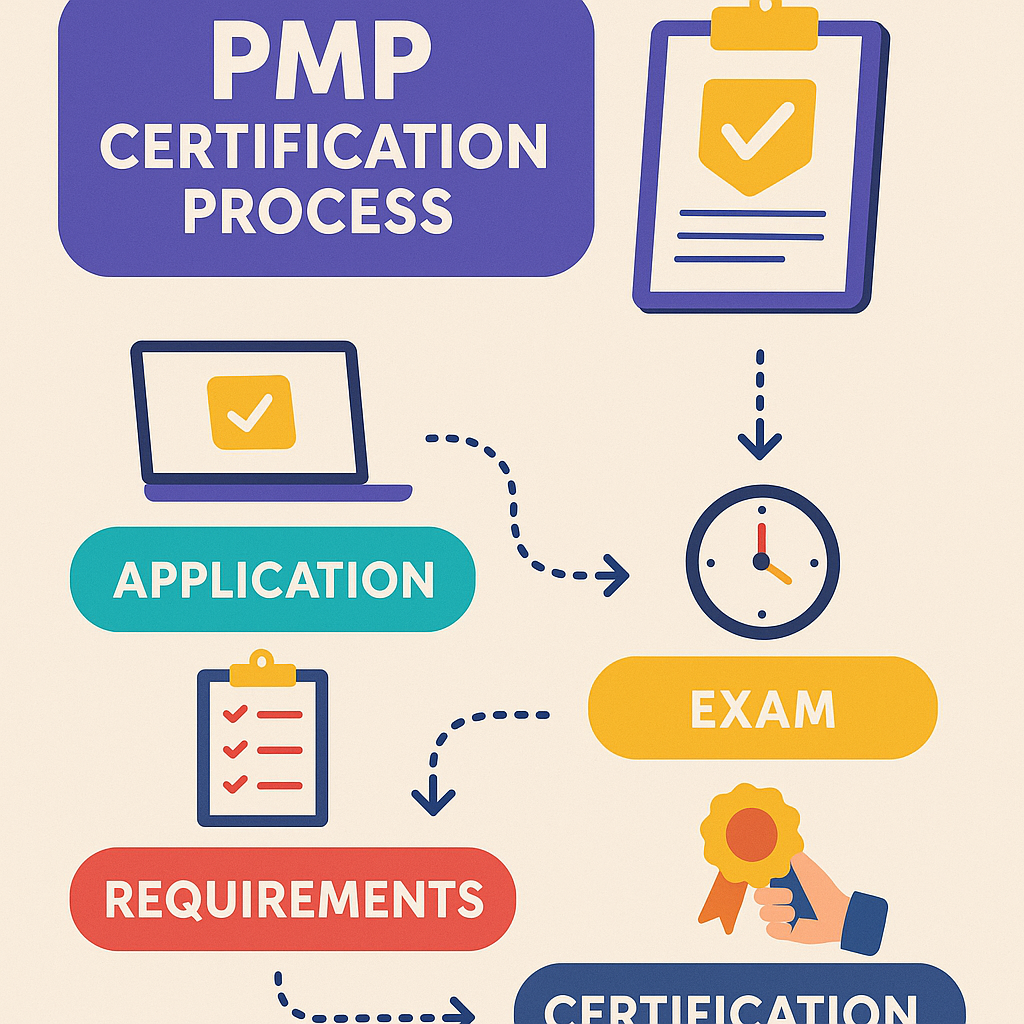
Passing the PMP® is less about raw hours and more about studying the right things in the right order. With the 2026 exam now aligned to PMBOK® 8 — and Business Environment reweighted to roughly 26% — a focused, structured plan beats months of unguided reading. Here is a realistic 30-day plan to pass on your first attempt.
Before you start: set the foundation
Two things determine whether 30 days is enough. First, treat the PMP as a test of judgement, not memory — most questions ask what a project manager should do in a situation. Second, make sure your study material is aligned to PMBOK 8 and the 2026 exam. Block out 2–3 focused hours a day, and protect it.
Week 1 — Foundations and the People domain
- Learn PMBOK 8 principles and how the three exam domains connect.
- Study the People domain: servant leadership, team building, conflict management, stakeholder engagement, emotional intelligence.
- Start a daily habit of 20–30 practice questions, reviewing the reasoning behind every answer.
By the end of Week 1, you should be comfortable thinking like a servant-leader project manager.
Week 2 — The Process domain
- Work through the Process domain: scope, schedule, cost, quality, risk, procurement, and communications.
- Map predictive, agile, and hybrid approaches to each process area.
- Increase to 40–50 practice questions a day, still reviewing every miss.
This is the technical heart of the exam — give it the time it deserves.
Week 3 — Business Environment, agile, and the new themes
- Study Business Environment (~26%): compliance, organizational change, benefits realization, value delivery.
- Reinforce agile and hybrid delivery.
- Cover the 2026 themes: AI in projects and sustainable, value-driven delivery.
- Take your first full-length mock exam at the end of the week.
Week 4 — Mocks, weak areas, and exam readiness
- Take 2–3 full-length mock exams in the interactive 2026 format.
- Use mock results to target weak domains — re-practice, not just re-read.
- Review situational-question technique: eliminate clearly wrong options, then choose the most proactive, value-aligned action.
- Rest the day before the exam.
Exam-day tips
- Read each scenario for what is actually being asked before looking at the options.
- Favor proactive, collaborative, and value-delivering answers over reactive ones.
- Manage your time — 180 questions in 230 minutes means roughly 75 seconds per question.
- Trust your preparation; second-guessing well-reasoned answers is a common trap.
A sample daily study rhythm
- 20 minutes reviewing yesterday's weak topics.
- 60–90 minutes on the day's new domain content.
- 30–40 minutes of practice questions.
- 10 minutes logging which question types you missed and why.
The logging step matters most — patterns in your mistakes tell you exactly what to drill next.
Why candidates fail — and how to avoid it
The most common reasons for a failed first attempt: studying PMBOK 7-only material, neglecting Business Environment, memorizing instead of practicing judgement, and poor time management on exam day. Each is entirely avoidable with a structured plan and daily feedback.
Get PMP certified — pay only after you pass
inSAKE Academy offers daily one-to-one mentorship, a 100% pass guarantee, and all materials free — and you pay only after you are certified. Full PMI application and 35 contact-hour support included. Book a free mentor session today.
Frequently asked questions
Is 30 days enough? Yes, with 2–3 focused hours daily and structured mentorship to target your weak areas.
How many mock exams should I take? At least 3–4 full-length mocks, reviewing every wrong answer in detail.
What's the hardest part of the 2026 exam? Many candidates underestimate the reweighted Business Environment domain and the volume of agile/hybrid questions.
How many questions and how long? 180 questions in 230 minutes.
What mock score signals I'm ready? Consistently scoring "above target" on full-length 2026-format mocks.