The Project Management Professional (PMP)® is the most recognized project management certification in the world — and in 2026, it is going through its biggest change in years. With the Project Management Institute (PMI) rolling out the PMBOK® Guide 8th Edition and a brand-new exam from 9 July 2026, anyone planning to get certified this year needs to understand exactly what is changing, what the exam now tests, and how to prepare efficiently.
What is the PMP certification?
The PMP is a globally recognized credential awarded by PMI, USA. It certifies that you can lead and direct projects using predictive (waterfall), agile, and hybrid approaches. For many professionals, the PMP is the credential that signals the shift from "doing the work" to "leading the work" — trusted by employers in over 200 countries across IT, BFSI, construction, healthcare, manufacturing, and consulting.
Why pursue the PMP in 2026?
- Demand is rising — organizations need certified leaders who can deliver complex, cross-functional projects.
- The salary premium is real — PMP holders earn 20–30% more than non-certified peers in India.
- The credential is future-facing — the 2026 exam adds AI and sustainability content.
- It travels — recognized internationally in the GCC, US, UK, and beyond.
What's new in 2026: PMBOK 8 and the July 9 exam
- Business Environment reweighted — jumps from ~8% to ~26% of the exam.
- AI and sustainability become core themes — reflecting how modern projects actually work.
- Interactive question formats — more scenario sets and decision-focused questions.
- More structured framework — PMBOK 8 blends 6 principles, 7 performance domains, 5 Focus Areas, and 40 adaptable processes.
Practical takeaway: training aligned with PMBOK 8 means you are studying for the current exam, not an outdated one.
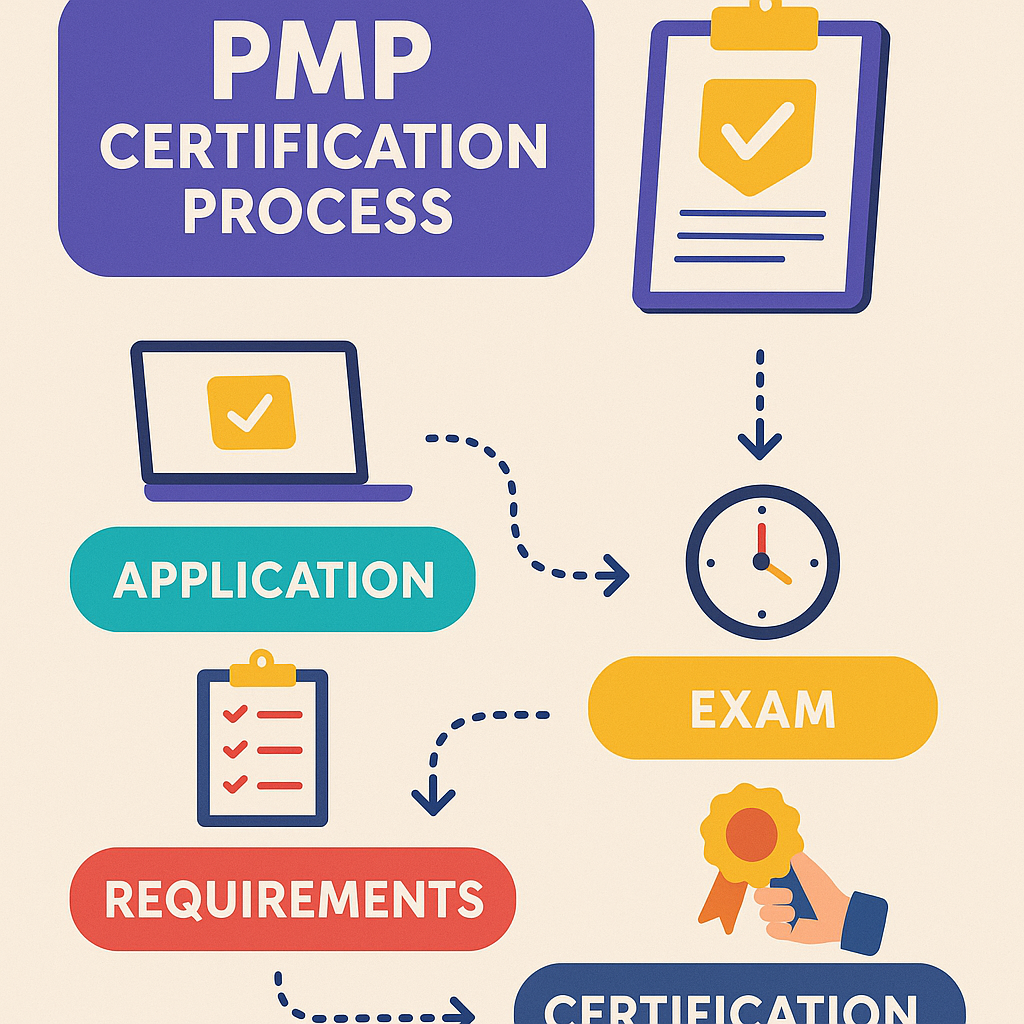
PMP eligibility requirements
- Four-year degree: 36 months leading projects + 35 hours of PM education.
- High-school diploma/associate degree: 60 months leading projects + 35 hours of education.
- The 35 contact hours are part of most structured preparation programs.
PMP exam pattern
180 questions in 230 minutes, across three domains: People, Process, and Business Environment. Question types include multiple choice, multiple response, matching, hotspot, and — new for 2026 — interactive scenario sets.
PMP syllabus: what you actually study
- PMBOK 8 foundations — principles, project life cycle, and how the exam is structured.
- People domain — servant leadership, team building, conflict resolution, emotional intelligence.
- Process domain — the Focus Areas and processes for scope, schedule, cost, quality, risk, procurement.
- Business Environment — value delivery, benefits realization, compliance, strategy alignment.
- Predictive, agile, and hybrid delivery.
- AI, sustainability, and modern value delivery.
- Exam strategy, mock practice, and PMI application support.
PMP salary in India (2026)
- Entry-level (0–5 years): ₹6–8 LPA
- Mid-level (5–10 years): ₹12–16.5 LPA
- Senior (10+ years): ₹25 LPA and above
Pay is strongest in IT services, BFSI, consulting, and infrastructure, and in metros like Bengaluru, Mumbai, Hyderabad, and Pune.
How to pass the PMP on your first attempt: a study plan
- Build the foundation first — understand PMBOK 8 before memorizing anything.
- Master the heaviest areas — Business Environment deserves real attention alongside Process.
- Train on agile and hybrid — a large share of questions assume you can choose the right approach.
- Practice situational questions daily — the exam rewards judgement, not rote recall.
- Take full-length mocks in the new interactive format and review every wrong answer.
- Sort your application early — get 35 contact hours and PMI documentation ready.
Common mistakes to avoid
- Studying outdated PMBOK 7-only material.
- Underestimating the reweighted Business Environment domain.
- Memorizing instead of practicing scenario-based decision-making.
- Leaving the PMI application and audit to the last minute.
Get PMP certified — and pay only after you pass
At inSAKE Academy, you get daily one-to-one mentorship, a 100% pass guarantee, and all books, mock exams, and case studies free — and you pay only after you are certified. India's first pay-after-pass PMP program, fully aligned with PMBOK 8 and the 2026 exam. Book a free mentor session and check your eligibility today.
Frequently asked questions
Is the PMP worth it in 2026? Yes — demand and salary premiums remain strong, and the updated exam reflects modern, AI-aware project management.
Should I take the exam before or after 9 July 2026? Both lead to the same credential. Training on PMBOK 8 prepares you regardless of timing.
How long does it take to prepare? With focused daily mentorship, many candidates are exam-ready in about 30 days.
Is the PMP exam hard? It tests judgement, but structured preparation with heavy mock practice makes a first-attempt pass realistic.
Does the PMP expire? You maintain it by earning 60 PDUs every three-year cycle.
PMP vs PRINCE2? PMP is dominant in India, the US, and the Middle East; PRINCE2 is more common in the UK and Europe. PMP has wider global recognition.